
With yesterday being valentine’s day, the subject of love is a common theme. There are so many types of love in our lives. The focus of my blog today is self love. How does self love or self care, a better term for this post, intersect with music therapy, internship, or overall life? It intersects through subjects I’ve been meaning to research and write about: compassion fatigue and burnout. Instead of committing to writing it, I have opted to write about easier subjects. While I love reading research, it’s difficult to find motivation when there are so few articles on the topic. I did find a couple of theses. It’s also hard to write about something you struggle with and for me that’s both burnout and self care. So in the interest of working on self growth and learning more about self care, I decided it was time to do this blog and read those theses.
Before diving into self care, I think it is important to first define burnout, compassion fatigue, and self care and their components.
Definitions
Burnout
At its most basic definition, burnout is mental/emotional exhaustion. Burnout is made up of “three distinct categories of symptoms: depersonalization, emotional exhaustion, and a lack of personal accomplishment” (Maslach & Jackson 1986). Depersonalization is explained as detachment from others, especially to the ones who receive care and services (Walker pg. 9).
In Neel’s study, subcategories such as “isolation” and “stressed relationships” paralleled depersonalization, “emotional instability” paralleled emotional exhaustion, and “lack of motivation, “procrastination”, and “decreased concentration” paralleled lack of personal accomplishment (Neel 2017). These subcategories helped me better understand but also reflect on how they may or may not show up in my life.
Compassion Fatigue
Compassion fatigue is a form of emotional burnout commonly seen in professions involved in the care of others.
Self care
The National Institute of Mental Health (NIH) defines self care as activities that help improve your life as well as your physical and mental health. Participating in self care helps manage stress, reduce illness, increase energy levels and help minimize effects of burnout.
Burnout in Music Therapy
The use of the word burnout in this setting and circumstances has been reserved for credentialed music therapists. Walker referenced data from Oppenheim’s (1987) article on factors that lead to occupational stress in music therapists. The highest reported causes of stress were “insufficient pay, lack of support and respect from administrators, and having to perform activities outside of the field” (Walker pg 11). These sources that lead to stress can also affect interns.
Besides stress, a “lack of self-awareness of needs, prolonged exposure to trauma, and lack of time or opportunities to focus personal development” can contribute to burnout and compassion fatigue (Oppenheim, 1987).
Compassion fatigue and burnout can lead to circumstances where clinicians end up leaving their profession. In a study by Cohen & Behrens referenced by Neel, “the average longevity of a music therapist is 13 to 14 years” (Cohen & Behrens, 2002)(Neel pg 12). This is not surprising when paired with data from Vega (2010) that found that music therapists are “more emotionally exhausted than the average mental health worker is” (p. 171).
So where does self-care come in?
As stated earlier, self-care can help minimize the effects of burnout, which in turn could hopefully help with the retention rate of music therapists. I have heard so many times that you can not pour from an empty cup. Self-care helps fill our cups.
My history with self-care
I have struggled with self-care. In my supervision last week, I talked about how it is hard to do things for myself. The last ten years of my life have been go, go, go. Give until there is nothing left to give. Did I give good results? Yes, most of the time, but it’s not sustainable. I found myself much like I find myself right now: exhausted. Exhausted, procrastinating, feeling guilty for staring at my assignment and not getting it done, but also feeling guilty if I stop and take a break or do something I enjoy. My team has changed my schedule around so I have time for my body to heal from surgery, to rest up, to allow me to partake in self-care, but here I am after my first week with this schedule struggling. As easy as it is to say to others, it is hard to tell myself that progress isn’t linear. Part of that progress for me is to work on my self-care
Ideas of self-care for myself
Starting off easy, I made a list from self-care activities I have taken part in before. I want there to be more facets to my being than working a lot and being tired.
- Non work related hobbies
- Reading
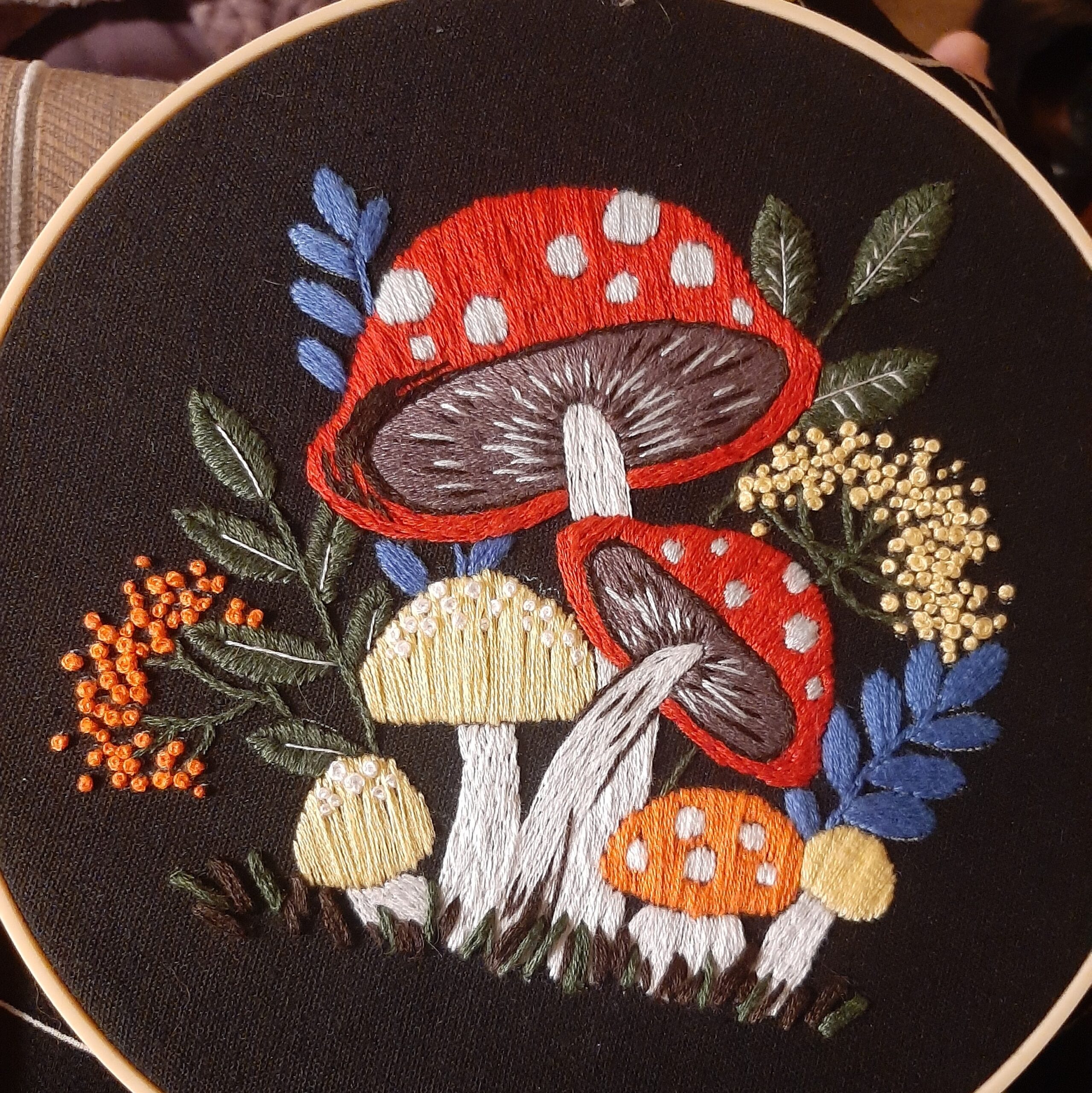
- Embroidery
- Baking
- Going on walks
- Dancing for fun
- Making home cooked healthy meals
- Staying better connected with my grandparents
- Being more social
- Taking the opportunity to try something new
- Enjoying nature as it gets warmer
- Therapy
References
- Maslach, C., & Jackson, S. E. (1986). Maslach burnout inventory manual. Palo Alto: Consulting Psychologists Press.
- Neel, Kristin Marie (2017). Self-Care For Students: A Pilot Study On Self-Care Education For The Preinternship Music Therapy Student. Appalachian State University. Thesis. https://doi.org/10.71889/5fylantbak.29862563.v1
- NIH https://www.nimh.nih.gov/health/topics/caring-for-your-mental-health
- Vega, V. (2010). Personality, burnout, and longevity among professional music therapists. Journal of Music Therapy, 47, 155–179
- Walker, Ayelet, “An Exploration of Perceived Stress Among Music Therapy Interns” (2012). Theses & Dissertations. 50. https://digitalcommons.molloy.edu/etd/50