As a part of my internship assignments, I have written 8 songs. These 8 songs were a part of my midterm and are now used at one of the contracts I see, which is pretty wild, if I do say so myself. This week, my assignment was to write two more songs. One for myself and one that addressed mental health needs with teenage clients. This was very different from writing a song about winter or waiting our turn.
It’s scary to write something like this. When you write a movement song, the judgment you open yourself up to is musical in nature. When you write a song about emotions, you realize that you are opening yourself up for someone to judge what you think and feel. It is so important to remember this when asking our clients to partake in songwriting.
Songwriting
My Process
Looking back at my previous posts, I realized I have never talked about my songwriting or my process. The songs I have written, for the most part, have fallen into two categories: songs where I came up with the lyrics or basis for my lyrics first, and songs where I started with a chord progression or a melodic line. For these two songs I wrote, the mental health songs were part of the first category, whereas the song for myself started with the music first.
Writing The Mental Health Song
To create my lyrics, I started with a brain dump of emotions. Emotions that I have felt recently, mixed with thoughts and feelings I expressed in songs I wrote when I was a teenager. I then sorted through to create possible lyrics. Next, I went to my sister. I ran possible lyrics past her because I wanted her opinion, as she had also dealt with mental health struggles in our youth, and I wanted a different perspective from my own. I wanted to make sure the content was relatable. I was afraid of it being too heavy, and that’s when she gave me the greatest quote. She said, “GraceAnne, I was clinically depressed. What kind of music do you think I was listening to?” Don’t worry, I have her permission to say that. I just had to add music.
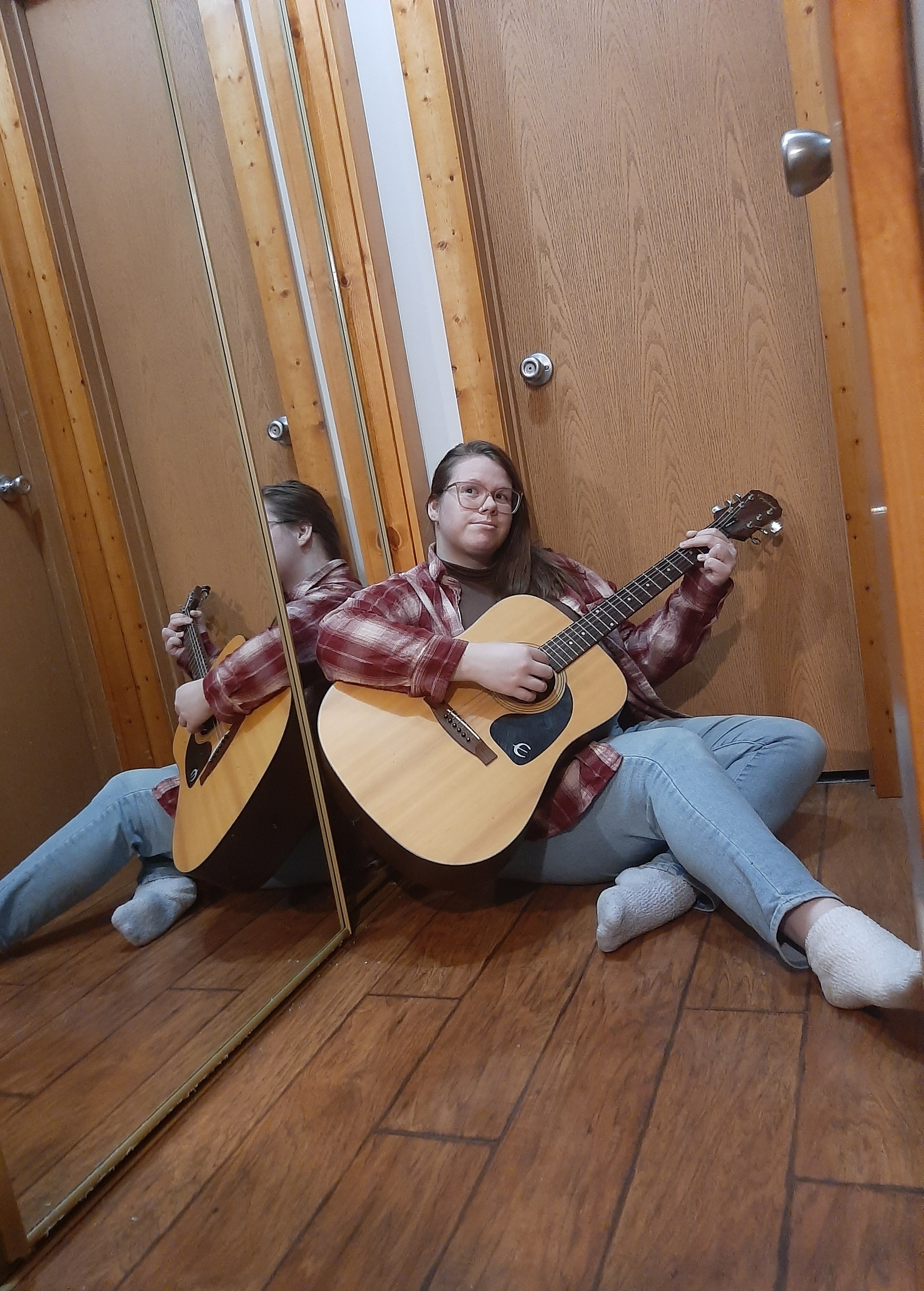
Whether starting with lyrics or not, I usually tinker around on my guitar to get the chord progression or melodic line. Messing around, I really felt drawn to a harmonic minor feel. I messed around and borrowed major chords from it’s parallel major, creating a mixed modal sound. This is just a fancy way to say the chord progression doesn’t really belong to major or minor, which fits a song about being stuck and trying to move forward.
Writing A Song For Myself
I found this to be harder than anything, not just for the reason I discussed in the beginning of this article, but because once I wrote it down and shared it, it made it true. True, that these feelings were mine. I could have written a song about anything, but without me trying formed into a song about struggling. A song about being angry and tired. A song about how exhausting it is to be a chronically ill and neurodivergent woman in this world. It’s scary to feel what may be considered as non-positive emotions and then to own those feelings.
Due to the weather, the guitar I have been using keeps going out of tune. Whenever I pick it up, the low E string has gone close to a full step flat. I didn’t realize the guitar was pretty much in Drop D tuning when I was noodling around melodically. Once I did notice, I tuned it so it was actually in Drop D and kept going. I had created a melodic ostinato that became the backbone of my song. It made it sound like a grungy, early 2000’s song, so I decided to add power chords, because nothing says grunge like power chords. For lyrics, I improvised them on the spot. I kept adding until I found ones that I liked.
How They Can Be Used
If I were to use either of my songs with a client, my first thought would be a song discussion and maybe even a rewrite afterwards. I like to think that what I wrote is something others can relate to. I remember being a teen, struggling with my mental health and wanting to have these conversations. Kids have complex emotions and it does not do them a service to pretend they don’t and censor anything we may perceive as being too heavy, especially if they have already expressed those feelings and thoughts.
Songwriting In Sessions
There are so many ways and reasons to use songwriting in sessions. You can do MadLib-style fill-in-the-blank to reinforce parts of speech. Fill-in-the-blank to work on turn-taking or making a song more adapted to the client. You can do a piggyback/rewrite where you write part of a song or a whole song to a familiar tune. You can even write a song from scratch. All these ways work on self-expression, choice making, and create space for silliness, problem-solving, and emotional processing.
Some Of My Favorite Songwriting I Have Done
Two of my favorites, which I have done during my internship, were MadLib-style fill-in-the-blank. I did it with my school contracts. We worked on parts of speech, turn-taking, impulse control, and self-expression by creating the silliest version of “All Star” by Smash Mouth. It was so different at each school. It’s so special to see them laugh and enjoy themselves while creating music.
Another favorite songwriting project I did was during a practicum at Western. I saw a group of adults with mental health goals. We rewrote “Make Your Own Kind Of Music” by Cass Elliot after discussing it. We then took turns listing what we each thought made the others special, as well as our favorite things about each other, and used that as our lyrics, as well as ways of coping when “nobody else sings along”.
Last Thoughts
Songwriting isn’t easy, but it is so rewarding to have that finished product. Songwriting is such a valuable tool to use in sessions, but also as a music therapist needing music that fits a specific need. I used to dread writing music, but there is something so nice about being able to create a song when I can’t find a song or a song doesn’t exist for the specific purpose I need it for.
GraceAnne